

In What Form Do Animal Cells Store Glucose?
- How practice animals store glucose?
- Exercise animals brand their own glucose?
- What actually is Glycogen in animals?
- How & Where practise animals get their glucose?
- How do animals utilize the stored glucose to get energy?
- Why do animal cells store glycogen and not glucose?
How do animals store glucose?
Animals shop glucose in the form of glycogen. Glycogen is stored in the liver and skeletal muscle cells.
Glucose gets converted into Glycogen during the process chosen Glycogenesis. During Glycogenesis the glucose molecules are added to chains of Glycogen for storage in the body depending on the hereafter need for glucose availability and ATP energy requirement.
Glycogen is mostly available in the liver cells as compared to that of the skeletal muscle cells.
Glucose is a monosaccharide while Glycogen is a polysaccharide. Significant that glucose is a simple sugar molecule whereas, glycogen is a polymer fabricated of many glucose molecules joined together.
Both glucose and glycogen are carbohydrates, and the difference is that glucose is a monomer while glycogen is a polymer.
The glucose along with amino acids and fats is the chief free energy source of the fauna body and this is also what that fuels the brain.
When the trunk doesn't demand to utilise the excess glucose for free energy, it stores it in the liver and muscles.
The animal body besides has a biochemical mechanism to store that glucose in the form of glycogen as a future reservoir of energy.
Muscle glycogen is converted into glucose by musculus cells and liver glycogen gets converted to glucose for utilise throughout the body including the Central Nervous System (CNF).
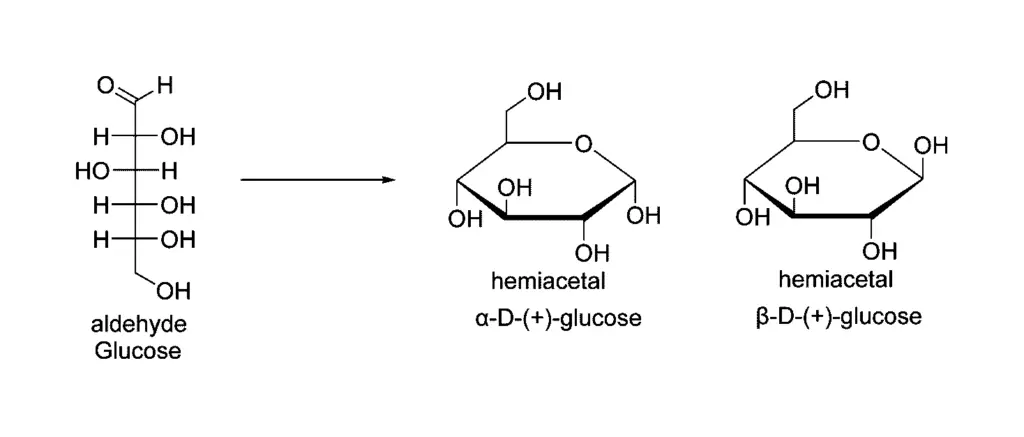
Do animals make their own glucose?
The glucose is the nigh important and arable source of instant energy in any biological trunk.
In animals that glucose is stored as glycogen, while in plants that glucose is stored in the form of starch equally a carbohydrate reserve.
Yes, animals can make their own glucose simply in order to do and so it needs to feed on lactose, sucrose, maltose, starch similar carbohydrates containing food.
But, if the animate being body doesn't go any kind of carbohydrate then it can't produce glucose of its own.
Now, if the animal body gets glucose directly from the nutrient and then it'southward all okay. But, if the body takes the food rich in other disaccharides or polysaccharides then the torso will synthesize glucose of its ain from the disaccharides and polysaccharides.
So, the fauna body needs to get carbohydrates from somewhere. So, it gets carbohydrates in the form of glucose or other disaccharides or polysaccharides by eating nutrient like fish, meat, breadstuff, rice, potatoes, vegetables, fruit, sugar, yogurt, and milk.
Then, the main source of glucose is the nutrient that the creature eats. In general, 300 m of glucose is produced per day by the conversion of food.
If the animals have eaten food with disaccharides similar fructose and galactose, and so these molecules will travel to the liver, where they can exist converted to glucose.
The breakup of glucose-containing polysaccharides like starch, cellulose, etc. can likewise happen in the animal's oral fissure during chewing of the food by means of amylase which is contained in saliva, and also by means of maltase, lactase, and sucrase enzymes secreted in the small intestine.
Now, it is also to exist noted that, glucose in very small amounts can also be synthesized from other metabolites in the body's cells. So, the body can too make glucose of its own due to the metabolites of other biochemical reactions going inside the complex torso.
Just for instance, if you see, glucose may also be produced from non-carbohydrate precursors, such as pyruvate, amino acids, and glycerol.
What actually is Glycogen in animals?
Glycogen is a polysaccharide carbohydrate reserve in animals that acts equally future reserve of free energy. Information technology is often referred to equally the animal starch.
It is present in loftier concentration in the liver, followed by the muscles, brain, etc. The liver cells and skeletal muscle cells are the sites of glycogen storage while the encephalon uses glucose from glycogen every bit fuel.
The structure of glycogen is similar to that of amylopectin with more than number of branches. Both glycogen and amylopectin are the polymers of glucose.
Glucose is really the repeating units in Glycogen joined together by α(1→four) glycosidic bonds, and α(one→6) glycosidic bonds at branching points.
Glucose is a unproblematic carbohydrate with the molecular formula C6H12O6. While Glycogen is a complex and long sugar polymer of glucose with molecular formula (C6H10Ofive)n where 'n' is the number of glucose molecules in the glycogen polymer.
Glycogen is a polymer of glucose with up to 120,000 glucose residues or in a minimum of 2,000-60,000 glucose residues per 1 molecule of glycogen.
The Glycogen is composed of units of glucose linked past α(1→4) with branches occurring α(1→6) approximately after every eight to 12 residues.
Glucose is an osmotic molecule and can have profound furnishings on osmotic pressure in high concentrations possibly leading to cell harm or prison cell death if stored in the cell without existence modified.
Glycogen is too a not-osmotic molecule, so information technology tin also be used every bit a solution to storing glucose in the jail cell without disrupting osmotic pressure.
How & Where do animals go their glucose?
Animals go their glucose from the carbohydrate rich nutrient that they do swallow like meat, fish, leaves, vegetables, rice, grass, etc.
If the animals directly consume food like fish, meat, rice, etc. so they will straight get the glucose they will need.
If the animals swallow food like fish, meat, sugar cane, green leaves, white potato, sweet root vegetables such every bit beetroot and carrots, etc. so they volition get disaccharides, polysaccharides from the food which will be broken down in their body to derive the monosaccharide glucose from it.
So, in very simple words carbohydrate containing food is the ane and only direct or indirect source of glucose.
The food that includes meat, fish, bread, rice, pasta, potatoes, vegetables, fruit, sugar, yogurt, and milk are the superlative-most sources of carbohydrate for both humans and animals alike.
Subsequently eating the nutrient, the brute bodies are able to change 100% of the sugar into glucose for energy needs.
And so, you volition often run into that after eating food the blood carbohydrate levels can be changed or affected speedily, within an hour or two after eating.
So, How the glucose is taken? The saliva contains amylase that can break down amylose, starch, and amylopectin into smaller bondage of glucose, called dextrins and maltose.
The breadbasket and small intestines absorb the glucose past the enzymes amylase, maltase, lactase, and sucrase, and which go captivated into the bloodstream.
At present, the glucose that enters the bloodstream from the breakdown of nutrient can either enter into the jail cell for its utilization or can exist converted to glycogen by glycogenesis in the liver and skeletal musculus cells.
The glucose can exist intaken directly in the body cells from the blood stream to produce ATP energy following a machinery of facilitated diffusion through a family of hexose transporters embedded in the cell membrane by the activity of insulin hormone.
For example: In the skeletal musculus cells, a kind of hexose transporter embedded in the cell membrane is GLUT4 to intake glucose.
If excess glucose is to exist converted than those glucose molecules volition go through the process of gluconeogenesis majorly in the liver. Gluconeogenesis in very small amounts tin also take identify in the skeletal muscles, kidney, brain, and likewise in the heart muscles.
How do animals utilize the stored glucose to become energy?
The stored glucose in the fauna body is really the glycogen and nothing else. The glucose (or glycogen) stored in the fauna body leads to the production of energy for the body's cells past glycolysis.
In simple words, Glycolysis is defined as a sequence of reactions converting glucose (or glycogen) to pyruvate or lactate with the product of ATP every bit energy for fulfilling the torso'southward energy requirements and for carrying on the body'south metabolic activities.
Glycolysis is the first stride in the breakdown of glucose to extract energy for cellular metabolism.
This process of glycolysis consists of both of an energy-requiring phase followed by an energy-releasing phase.
This glycolysis procedure takes place inside the each and every prison cell of the body. And, all of the enzymes for carrying on glycolysis are present inside the cytoplasm of every cell.
In fact, Glycolysis is a major pathway for ATP energy synthesis in cells defective mitochondria. For example in RBC cells, eye cornea, lens, etc.
Remembered, we said glycolysis leads to converting glucose (or glycogen) to pyruvate or lactate with ATP production. So, here Pyruvate is the result of aerobic respiration whereas, Lactate is the issue of anaerobic respiration.
And then, Glycolysis occurs both in the absence of oxygen (anaerobically) or in the presence of oxygen (aerobically).
Lactate is the end product under anaerobic conditions. In the aerobic condition, Pyruvate is formed which is and so oxidized into COtwo and HtwoO as end products.
Why do animal cells shop glycogen and not glucose?
The first reason why animal cells store glycogen and not glucose is that if glucose molecules remain present in the cell then it volition eventually starting time taking up water inside the cell through a procedure chosen osmosis.
This tin can cause the jail cell to burst and rupture if excess h2o gets within the jail cell. So, glycogen existence a very large polymer doesn't intake water by osmosis.
The glucose is present in very niggling quantity in the claret and is well soluble in h2o. If the glucose is present in higher quantity in the blood then it volition suck the water out of cells into the blood stream thus, causing problem for the cell and altering the normal torso operation.
And then, the excess glucose is stored equally glycogen inside the cells equally macromolecular particles that are insoluble in h2o.
So, in very unproblematic words, glucose cannot exist stored in the cells of the animal body due to the loftier osmotic pressure which glucose exerts inside the cell, causing the entry of water in the cell past endosmosis.
This is the reason that the glucose is converted to glycogen in the liver for storage because glycogen is osmotically more stable than glucose.
Likewise another reason is that the controlled breakdown of glycogen and release of glucose increase the amount of glucose that is available between meals. Hence, glycogen serves as a buffer to maintain claret-glucose levels.

Source: https://onlyzoology.com/how-do-animals-store-glucose-do-animals-make-glucose/
Posted by: tracydeftern.blogspot.com
0 Response to "In What Form Do Animal Cells Store Glucose?"
Post a Comment